Views: 0
She Was Sleeping in Seat 8A — Until the Captain Asked if Any Combat Pilots Were On Board
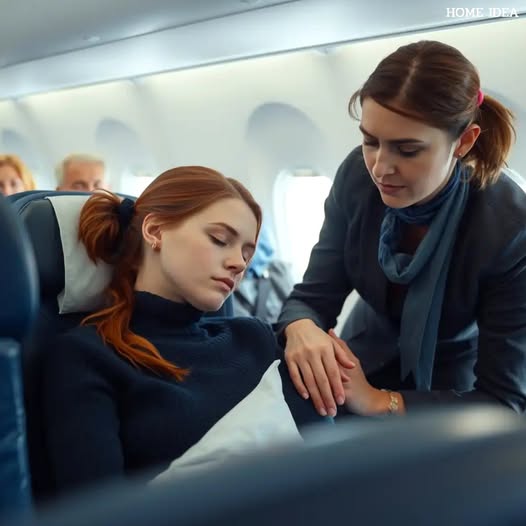
She looked like any other passenger in seat 8A, quietly resting during a long overnight flight—until the captain’s voice cut through the silence.
“If there is a combat pilot on board, please identify yourself immediately.”
Nearly 300 passengers froze.
No one realized the woman in the green sweater was anything more than an ordinary traveler.
The plane was cruising at 35,000 feet over the Atlantic, flying from New York to London. Inside the dim cabin, everything felt routine—engines humming, passengers sleeping, watching movies, or passing time. It should have been just another uneventful flight.
Then the announcement came.
“Ladies and gentlemen, this is your captain speaking.”
But this time, the tone was different—tight, serious.
“We are experiencing a technical issue that requires urgent assistance. If anyone here has combat pilot experience, please contact the crew immediately.”
The cabin fell into stunned silence. Conversations stopped. People looked around, confused and uneasy. A request like that on a commercial flight was unheard of.
No one could imagine what kind of emergency needed a combat pilot.
In seat 8A, the woman in the green sweater shifted slightly, still half-asleep—unaware that her hidden past was about to surface.
Her name was Mara Dalton, though no one on board knew it.
To the man beside her, she was just a tired passenger. To the flight attendants, she was quiet and polite, declining food and asking only for water and a blanket. To everyone else, she blended into the background—exactly how she wanted it.
She had chosen anonymity. The window seat. The overnight flight. A chance to just be “Mara,” not Captain Dalton.
Not the decorated fighter pilot. Not the officer who had flown dangerous missions. Not the woman tied to classified operations.
Just someone trying to rest… and forget.
But when the atmosphere in the cabin shifted, it pulled her out of sleep. The tension, the silence—it was familiar. Too familiar.
She had seen that kind of urgency before.
A flight attendant moved through the aisle, scanning passengers, her expression growing more anxious by the second.
Mara closed her eyes again.
This wasn’t her responsibility anymore.
She had walked away from that life. She was done being the person everyone depended on in a crisis.
She could stay quiet.
Let someone else step up.
Then she heard a voice beside her.
“Ma’am…”
She opened her eyes.
The flight attendant was looking straight at her.
Something in the woman’s face triggered old instincts—years of training snapping back instantly. This wasn’t routine. This was serious.
“Ma’am,” the attendant said carefully, “the captain is asking for anyone with combat pilot experience. Do you know if someone here can help?”
Mara glanced around the cabin.
A mother holding her baby.
An elderly couple gripping each other’s hands.
Passengers staring ahead, uncertain, afraid.
And in that moment, she understood something she couldn’t ignore.
She may have left the military behind—but she hadn’t stopped being who she was.
She took a steady breath.
“I’m a pilot,” she said quietly.
The attendant leaned in. “I’m sorry?”
Mara sat up straighter, her voice calm but firm.
“I’m a combat pilot. United States Air Force. I flew F-16s.”
A ripple of whispers spread through the cabin. Heads turned. The man beside her stared in shock. An older passenger reached out, squeezing her arm.
“Thank God,” he murmured.
Relief flooded the flight attendant’s face.